We’ve officially crossed the threshold from "challenging" into "historic." Between the Strait of Hormuz blockage and the return of 2023-level supply chain pressures, the margin for error has evaporated. This week’s edition focuses on the shift from cost-saving to risk-shielding. If your strategy isn’t accounting for a 30-day "geopolitical buffer," you aren't managing a supply chain—you’re managing a hope chest.
Hormuz Hits the Hubs: Perishables in the Crossfire
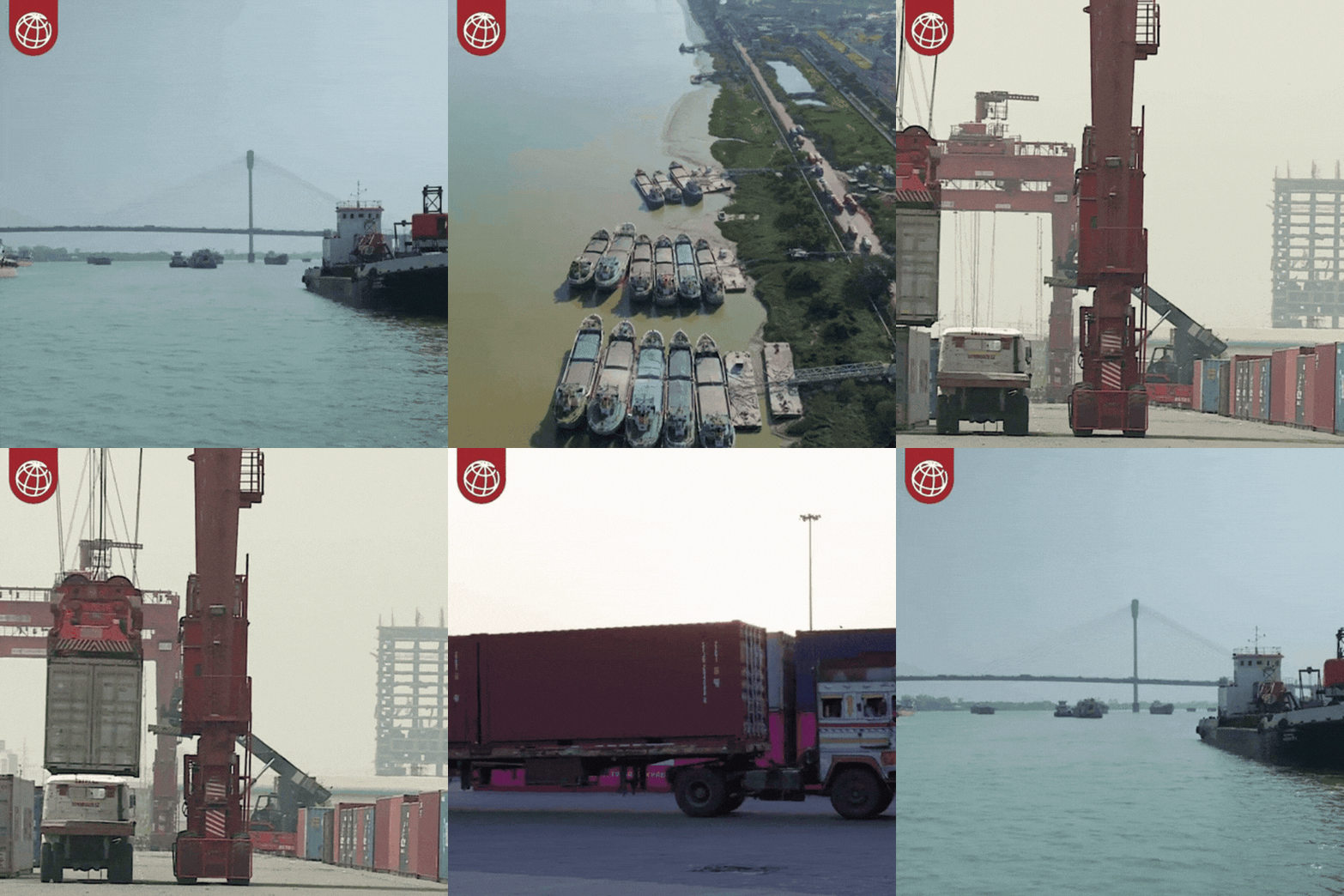
As the U.S.-Iran conflict enters month two, the "nuts and bolts" of ASEAN trade are rattling loose. Logistics veteran Chris Catto-Smith warns that the Hormuz shutdown has triggered severe vessel bunching in Singapore, shattering "just-in-time" schedules.
The collateral damage? The Cold Chain. Perishables are rotting in transit, crushing farm-gate margins and spiking shelf prices across Southeast Asia. This crisis exposes a systemic lack of remote infrastructure and post-harvest resilience. When global chokepoints tighten, the first mile bleeds first.
Dimerco has just launched its State of Air & Ocean Freight Asia-Pacific survey, and it couldn’t come at a more poignant moment. They are tapping into the collective strategy of manufacturers and retailers to map out how the industry is navigating the current H2 2026 forecast. In a market where data is everything, this real-time pulse check on shifting strategies across APAC trade lanes will define the benchmarks for the rest of the year.
Don't just wait for the report—participate. Shippers who contribute to these aggregate benchmarks will get the earliest look at transit expectations and modal shifts.
C3’s 2026 State of Dock and Yard Management Report surfaces a shift that’s hard to ignore: manual inefficiencies are climbing (40.3%), even as real-time visibility becomes non-negotiable (59.1%).
So what’s breaking? Execution.
A striking 55.7% of operators are hitting friction on implementation and adoption. Translation: the tech is there, the outcomes aren’t. Visibility without workflow integration is just expensive awareness.
The real shift is sharper. Operators are done spotting problems. They’re chasing root causes, upstream, where labor, scheduling, and system gaps quietly stack costs.
Download the full report and see where your yard is leaking margin and where the next gains are actually hiding.
The Pressure Gauge: January 2023 Levels are Back
Global supply chain pressure has officially hit its highest point in over three years. Between the Hormuz crisis and shifting trade policies, the "volatility index" is screaming. This isn't just about ships; it's about the financial strain on the mid-market as bond exposure rises and decision timelines compress.
If you haven't renegotiated your ocean contracts for the H2 2026 window, do it now. Capacity is becoming a seller’s market faster than you can say "Force Majeure."
This is the typical impact that international shipping costs are currently exerting on total sales, according to the latest Dimerco Freight Report. With jet fuel prices surging and carriers slashing flight frequencies in Vietnam and Thailand, the "base rate" has become a myth.
Between the Section 122 10% import surcharges and emergency bunker adjustments hitting rail and road, the cost to move goods in the Asia-Pacific corridor is no longer just a logistics line item—it’s a direct threat to gross margins. If you aren't optimizing routing and negotiating beyond the base rate, you're likely overpaying by double digits.
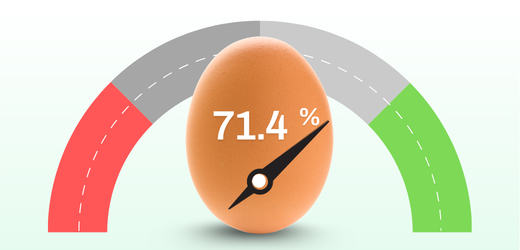
Meet the SCR Egg-O-Meter—the world’s first sentiment-driven kitchen gadget for supply chain leadership! 🍳
Using a clever NLP algorithm, we analyze 30 days of media buzz to see who’s handling the heat. Whether they’re "Hard-Boiled" traditionalists or "Runny" risk-takers, we score execs on how they scramble innovation and adaptability into a winning recipe.
Want to see who’s serving up a perfect Sunny-Side-Up strategy in today’s volatile market? Check out the full breakdown here!
If anyone knows how to steer a titan through a storm, it’s Happe. From managing the complex financial flows of A.P. Moller - Maersk to leading the massive turnaround at GE, she’s now at the helm of Microsoft’s company-wide AI transformation. Reporting to Satya Nadella, she is currently scaling business operations to be AI-first.
Happe’s focus on "Commerce + Ecosystems" reminds us that efficiency isn't just about cutting costs—it's about accelerating adoption. In 2026, if your operational backbone isn't automated, your "complexity" will eventually become your "clog."
.png?upscale=true&width=1196&upscale=true&name=Header-Image-SCR%20(1).png)