Welcome to this week’s Supply Chain Radar: Sustainability edition, where electrification plugs in, AI dials emissions down, and sustainability officially graduates from “nice-to-have” to non-negotiable. ⚡🤖🌎
But it’s not all smooth charging: EV battery economics are getting a reality check, packaging sustainability is moving from promises to pressure, and global retailers are experimenting with everything from river freight to AI routing to hit climate targets that customers now expect.
👉 Scroll on for EV inflection points, AI-powered decarbonization, and why sustainability strategy is becoming supply chain strategy.
Pilot Plugs In ⚡
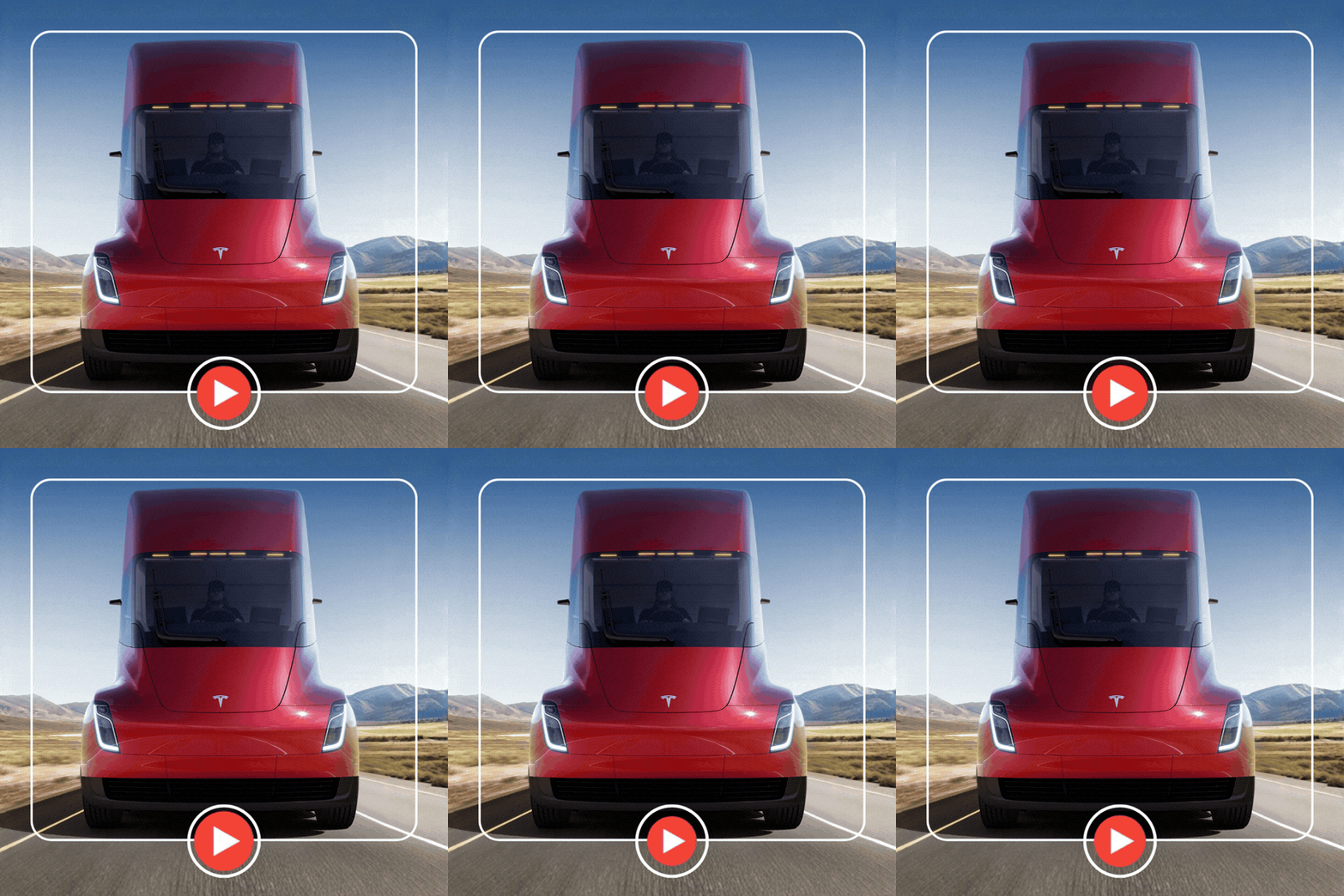
Pilot Travel Centers is teaming up with Tesla to install high-powered Semi chargers along major U.S. freight corridors, starting in summer 2026. The first sites, spanning I-5, I-10, and key routes in California, Texas, and beyond, will deliver up to 1.2 MW per stall, aligning charging time with mandated driver rest breaks. The move signals growing momentum for heavy-duty EV infrastructure at scale.
Amazon cut energy use by nearly 15% at three grocery fulfillment centers using Trane Technologies’ BrainBox AI, an autonomous system that optimizes HVAC and ventilation in real time with help from Amazon Web Services. After the pilot’s success, Amazon plans to roll the tech out across 30+ U.S. sites—part of its broader push toward carbon neutrality by 2040.
Heading to Manifest 2026? Book an on-site meeting with Pesti Group, the team helping logistics brands turn green initiatives into real market credibility. From decarbonization storytelling and executive visibility to data-backed sustainability campaigns that cut through the noise, Pesti helps ensure your climate strategy actually lands with the right audience.
SK Innovation disclosed a $2.6 billion impairment after ending its U.S. battery joint venture with Ford Motor, underscoring how quickly EV ambitions are being recalibrated. The collapse of the BlueOval project reflects weaker U.S. demand, subsidy rollbacks, and mounting pressure across the battery supply chain. SK is now pivoting toward energy storage and non-automotive markets to stabilize growth.
Ingka Group is experimenting with river-based logistics in Paris, using boats on the Seine to move goods closer to customers before final EV delivery. The approach targets stubborn Scope 3 transport emissions as Ingka works toward a 50% CO₂ reduction by 2030. With most emissions tied to suppliers, tighter coordination, not scale, is proving the real decarbonization lever.
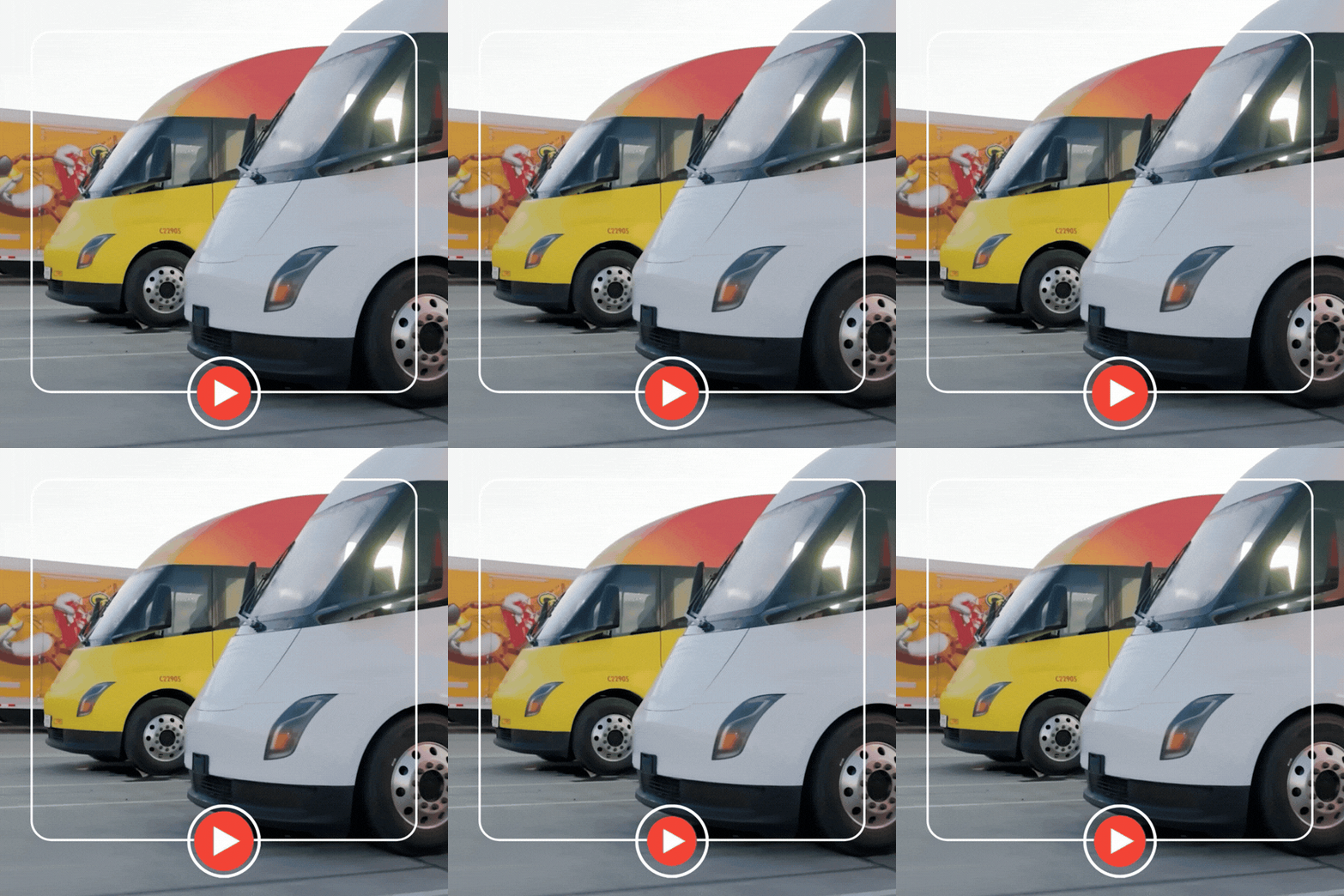
DHL Supply Chain has added a Tesla Semi to its Central California fleet, logging roughly 100 miles per day with just one weekly charge. The pilot hauled 75,000-pound loads over long-haul routes, signaling heavy-duty EVs are moving beyond test cases. DHL plans to expand its Semi fleet in 2026 as it pushes toward net-zero operations by 2050.
Bain & Co. warns that pulling back on sustainable packaging would be a “serious strategic miscalculation,” even as brands soften public ESG messaging. Behind the scenes, companies are still investing, driven by regulation and customer pressure. Nearly 60% of packaging buyers say they’ll switch suppliers within three years if sustainability targets aren’t met. The era of promises is over; execution is now table stakes.
FedEx says sustainability is now a core business driver for Asia-Pacific supply chains. A new APAC survey found 80% of SMEs factor environmental impact into logistics decisions, with Southeast Asia leading the shift. Consumers are pushing the change, too, most prefer visibly sustainable brands, and many will pay more for greener packaging. FedEx is responding with AI routing, EV fleets, SAF, and emissions-tracking tools.